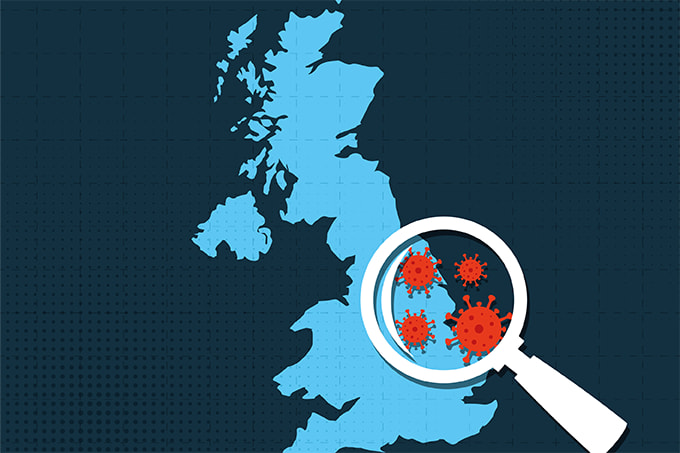
Vector-borne viruses are increasingly appearing outside traditional endemic regions, creating new diagnostic challenges for laboratories. In her talk at ESCMID Global 2026 in Munich, Marta Giovanetti, Associate Professor of Microbiology, highlighted how shifting epidemiology – driven in part by climate change – alongside evolving diagnostic technologies is reshaping how these infections are detected and monitored. Here, she joins us to discuss the practical challenges laboratories face and how diagnostic strategies must adapt to a more dynamic and unpredictable landscape.
Vector-borne viral infections are appearing in new regions. What are the main challenges for laboratories in identifying these infections early?
One challenge is that laboratories are increasingly asked to detect pathogens that may not be considered locally relevant. As a result, clinicians may not suspect them, routine testing panels may not include them, and commercial assays may be limited – particularly for less common arboviruses.
Timing is another issue. For many arboviruses, molecular detection is only possible during a short viremic phase. After this, diagnosis relies on serology, which can be complicated by cross-reactivity, especially among flaviviruses.
A further challenge is variability in laboratory capacity. This includes differences in trained personnel, sequencing infrastructure, reagent availability, supply chains, and access to confirmatory reference testing.
How is climate change affecting the spread of these viruses, and what does this mean for diagnostic testing?
Climate change is expanding the geographic range and seasonality of vector-borne diseases by affecting temperature, rainfall, humidity, and habitats suitable for vectors. As a result, infections such as dengue, chikungunya, and Zika are becoming more widespread.
For diagnostics, this means laboratories can no longer rely on traditional maps of where diseases are expected. Testing strategies need to be more flexible and adapted to local and seasonal changes, with a lower threshold for considering arboviral infections in areas previously seen as low risk.
Are current screening approaches sufficient, or is there a risk of missing emerging or unexpected pathogens?
There is a risk of missing emerging or unexpected pathogens if laboratories rely only on targeted assays. PCR and serology are essential, but they can only detect what they are designed to identify.
Guidance, such as WHO recommendations for dengue testing, supports the use of timed, algorithm-based approaches combining NAATs, NS1, and serology for known infections. However, atypical or unexpected cases may still be missed.
This highlights the importance of broader approaches, including untargeted methods, clear referral pathways, and sequencing-based testing when initial results are inconclusive.
How do extreme weather events influence disease severity, and can this be tracked through laboratory markers?
Extreme weather most clearly affects disease transmission by increasing vector numbers, creating breeding sites, and influencing outbreak patterns. Its impact on individual disease severity is less direct and is usually linked to factors such as delayed care, coinfections, dehydration, health system pressures, and patient vulnerability – rather than a specific climate-related biomarker.
In dengue, laboratories can monitor markers associated with progression to severe disease, including rising hematocrit, falling platelet counts, elevated transaminases, and signs of plasma leakage or organ involvement.
In practice, laboratories can track disease severity, but they are measuring the biological effects of infection rather than a distinct “climate-related” signature.
What are the main challenges in monitoring these infections over time, especially when symptoms overlap with other diseases?
The main challenge is the lack of specific clinical features. Early arboviral infections often resemble other febrile illnesses – such as influenza, malaria, leptospirosis, and rickettsial diseases – so cases can be misclassified without consistent laboratory testing.
Long-term monitoring is also difficult. PCR testing is limited to a short detection window, while serology can be affected by cross-reactivity. In addition, changing case definitions, underreporting of mild cases, and limited integration between clinical and laboratory data all add to the complexity.
How can laboratories better integrate data from human, vector, and environmental sources to support diagnosis?
This is where a One Health approach is essential. Laboratories should not work in isolation from patient samples alone. Instead, they need access to linked data on vector surveillance, local climate and environmental conditions, and, where relevant, animal and veterinary health.
Frameworks from WHO support this integrated approach, combining laboratory, epidemiological, and environmental data. This helps ensure that diagnostic interpretation reflects what is circulating in people, vectors, and the wider ecosystem.
What role do next-generation sequencing and RNA metagenomics play in detecting vector-borne viruses in practice?
Next-generation sequencing, including RNA metagenomics, has two main roles in practice. First, it allows broad, unbiased detection of pathogens when standard tests are negative or when the cause is unexpected. Second, it enables further characterization of identified viruses, including lineage assignment, mutation analysis, and tracking transmission patterns.
It is particularly useful in cases of unexplained febrile illness, unusual clusters, severe infections of unknown origin, vector surveillance, and outbreak investigations.
However, there are limitations. These include cost, turnaround time, the need for bioinformatics expertise, contamination control, and careful interpretation – especially in samples with low levels of pathogen material.
How feasible are WHO-recommended genomic surveillance approaches in routine laboratory settings?
They are feasible, but not typically used as a routine test for every sample. In most settings, a tiered approach works best. Frontline laboratories carry out standard diagnostic testing and ensure high-quality sample collection and data recording, while regional or national reference centers perform sequencing on selected cases.
These cases are usually chosen based on factors such as epidemiology, disease severity, travel history, unusual presentation, outbreak context, or gaps in geographic coverage. Guidance from WHO also emphasizes that sequencing should be integrated into existing laboratory systems and adapted to local capacity, rather than implemented as a separate, standalone activity.
How should laboratories balance targeted testing with broader approaches when dealing with emerging infections?
A staged approach offers the best balance. Targeted testing should remain the first line, as it is faster, more cost-effective, and clinically actionable. However, laboratories need clear criteria for when to escalate beyond these methods.
This may include cases of severe unexplained illness, negative initial results despite strong clinical suspicion, unusual epidemiological exposure, cluster detection, or signals from vector or environmental surveillance suggesting an unexpected pathogen.
In practice, broader methods should not replace routine diagnostics but should be used to complement them in a targeted and strategic way.
Looking ahead, which diagnostic advances are most likely to improve early detection and outbreak response?
The most promising advances include multiplex molecular panels that can be easily updated, faster point-of-care molecular tests, improved antigen detection, and more specific flavivirus serology with reduced cross-reactivity. Portable sequencing technologies and clinically validated metagenomic workflows with simplified bioinformatics are also developing.
Beyond laboratory methods, progress will also depend on better data integration. Interoperable systems, standardized metadata, and decision-support tools that link test results with vector, climate, and epidemiological data in near real time will be equally important.
What practical steps can pathologists and laboratory professionals take now to prepare for these emerging threats?
Laboratories can begin with practical steps: review and update local testing algorithms, broaden the differential diagnosis for febrile illness, and ensure proper sample storage for referral or sequencing. Strengthening links with public health and entomology teams is also important, as is maintaining quality-assured molecular and serologic testing.
Capturing standardized metadata – such as travel history, exposures, symptom timing, and location – can improve interpretation. Laboratories should also establish clear referral pathways for uncommon arboviruses and access to untargeted sequencing when needed. Preparation is less about adopting a single new technology and more about building a flexible system that can respond quickly to unexpected threats.
Overall, laboratories need to move from a static, pathogen-specific approach to a more adaptive model that combines targeted diagnostics, genomic surveillance, and One Health data integration. This shift reflects the reality that vector-borne disease patterns are changing faster than traditional testing strategies were designed to handle.
Newsletters
Receive the latest pathologist news, personalities, education, and career development – weekly to your inbox.