Clinical Report: Anatomy of a Social Media Success: In Numbers
Background
Social media has transformed communication in healthcare, providing a platform for professionals to share knowledge and support one another. The rise of visual and video-centric platforms offers new opportunities for engagement and education among clinicians and the public.
Data Highlights
No numerical or trial data provided in the source material.
Key Findings
- The #PathTwitter community has become a significant hub for pathologists and laboratory medicine professionals.
- Social media channels beyond Twitter are gaining traction for their unique communication styles.
- Professional and ethical standards for clinician-educators on social media emphasize privacy and boundaries.
- Recent guidelines restrict the use of images of human tissues on social media to protect confidentiality and dignity.
- Video-based and immersive anatomy education is increasingly recognized for its effectiveness in clinical education.
Clinical Implications
Healthcare professionals should be aware of the ethical guidelines governing social media use, particularly regarding patient confidentiality and the sharing of sensitive content.
Conclusion
The integration of social media in healthcare communication presents both opportunities and challenges.
Related Resources & Content
- Institute of Human Anatomy, The Pathologist, 2021 -- Anatomy of a Social Media Success
- American Medical Association -- Consent, communication & decision making: CEJA reports
- International Federation of Associations of Anatomists -- Recommendations for Good Practice Around Human Tissue Image Acquisition and Use in Anatomy Education and Research
- Eyecare Business — LAST WORD
- Eyecare Business — Marketing: Marrying Social Media with Email
- the pathologist — #SAYWHAT?
- Consent, communication & decision making: CEJA reports | American Medical Association
- Recommendations for Good Practice Around Human Tissue Image Acquisition and Use in Anatomy Education and Research - IFAA
- 360° Video-Based Virtual Reality for Preparing Medical Students for Body Donor Dissection: Randomized Controlled Trial - PubMed
- Frontiers | Evaluating the impact of interactive video-based case-based learning in clinical medical education: a randomized controlled trial
- Efficacy of virtual reality and augmented reality in anatomy education: A systematic review and meta-analysis - PubMed
This content is an AI-generated, fully rewritten summary based on a published scholarly article. It does not reproduce the original text and is not a substitute for the original publication. Readers are encouraged to consult the source for full context, data, and methodology.
Newsletters
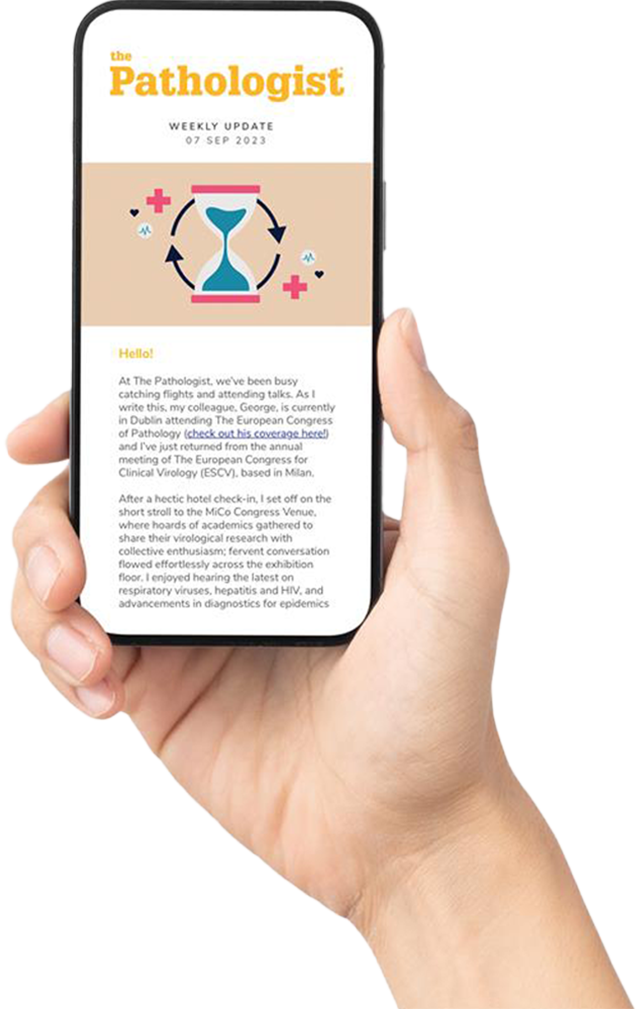
Receive the latest pathologist news, personalities, education, and career development – weekly to your inbox.