Alexandra "Ali" Brown trained in anatomic and clinical pathology before completing fellowships in surgical pathology and breast cancer. At MD Anderson Cancer Center in Houston, she became the first pathologist to undertake the Susan G. Komen Interdisciplinary Breast Cancer Fellowship, a program that divided her time between pathology and specialties including surgical oncology, medical oncology, palliative care, and patient advocacy.
The experience shaped Brown’s view of pathology as an integral part of the wider healthcare team. She subsequently spent five years in academic practice as part of a multidisciplinary breast cancer team, working closely with oncology and surgical colleagues and becoming involved in committees and initiatives beyond the pathology department.
Brown’s career later developed a strong focus on quality and performance improvement. While establishing a university biobank with a colleague, she encountered Lean improvement principles and began applying them to both the biobank and pathology practice. Her growing interest in using data to improve performance ultimately led to an opportunity with ASCP, which was developing a quality registry and needed expertise in the area.
Brown initially joined ASCP part time, later becoming chief medical officer and then interim CEO. In 2026, she was appointed the organization’s permanent CEO, completing a journey that had begun years earlier as an ASCP resident volunteer.
In this interview, she reflects on the experiences shaping her leadership of ASCP and her ambitions for the pathology and laboratory community.
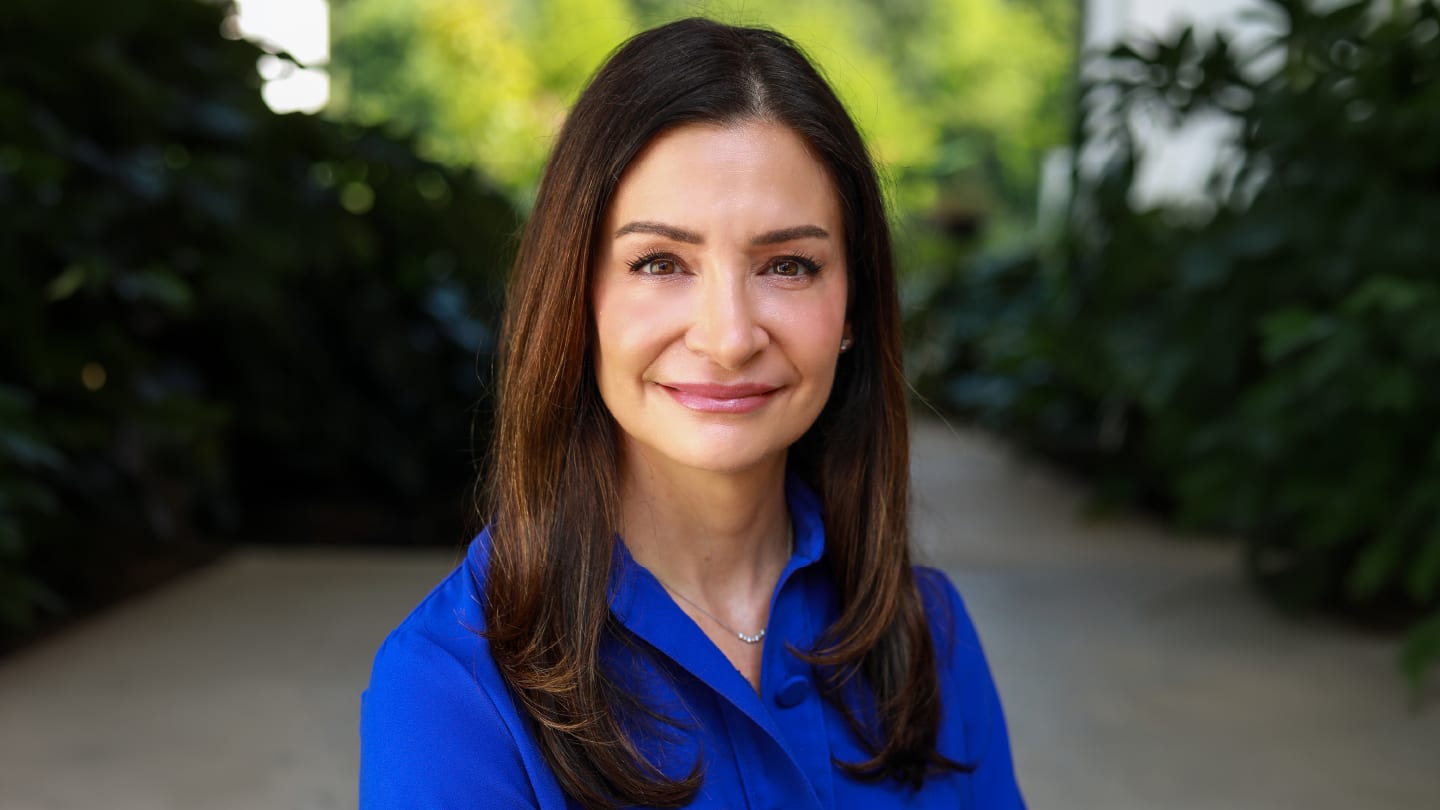
Having started as a resident volunteer, what does it mean to you personally to now lead ASCP as CEO?
It means everything. My career was never intentionally building toward this position, so I don’t take for granted the tremendous honor and responsibility that comes with it.
Having engaged with ASCP throughout my career, I’ve come to know the organization from both sides – as a volunteer and as a member of the ASCP team. That gives me a tremendous sense of ownership and responsibility for its success.
Ultimately, though, ASCP’s success depends on how well we serve our members. I really embrace that accountability as CEO: to make sure we’re listening to our members, understanding what they need, and delivering for them.
How did you maintain your professional knowledge in those early days working for ASCP?
When I first joined ASCP, I continued doing PRN work because I didn’t want to stop being a pathologist. Through that work, I ended up experiencing pathology practice in very different settings.
For example, I covered for a friend who was the sole pathologist at a rural hospital in Alabama, which meant doing everything: running the clinical laboratory, performing fine-needle aspirations, grossing, and signing out cases. I also worked with a large private practice group serving a multi-hospital system.
Looking back, those experiences were incredibly valuable. Between my academic background and my work in diverse practice settings, I gained a much broader understanding of what pathology looks like across different environments. That perspective has been really useful in my work at ASCP.
How did your breadth of experience help you to achieve your goals as Chief Medical Officer?
One of my strengths is having a broad understanding of pathology and laboratory medicine, and a genuine desire to understand and empathize with the people practicing every day – including pathologists and all members of the laboratory medicine team.
I feel like I’m exactly where I need to be because my expertise is really in connecting people, solving problems, and bringing people together to drive progress across the workforce.
It took me a while to recognize that. When I first became chief medical officer, I experienced some imposter syndrome. I worried, “I’m not the number one breast pathologist. I’m board-certified in informatics, but I’m not writing code or developing information systems.” Then I realized I don’t have to be the expert in everything. At ASCP, we have members and volunteers who are those experts. My role is to bring that expertise together and help us accomplish things collectively. That was an important change in mindset for me.
What kind of leader do you want to be as CEO?
I came into this position wanting to lead with transparency and accountability, with a very strong focus on the voice of our members and the impact they have on patients.
I want our members to understand what’s happening at ASCP, how we operate, and how we’re using our resources. Then we need to listen: Is this where our resources should be going? What do our board members, volunteers, and wider membership see as the priorities? Ultimately, it’s not about me. It’s about our members and the broader pathology and laboratory medicine community.
I also take accountability very personally. Everything ASCP communicates and does reflects on the organization and, as its leader, I’m ultimately accountable for that. For me, that means being transparent, listening carefully, and maintaining a relentless focus on the needs of our members.
How can professional bodies help pathologists navigate workforce pressures in today’s understaffed laboratories?
I was emailing with a former colleague this morning who is struggling to recruit enough cytopathologists, and you hear similar stories everywhere. It affects pathologists as well as the laboratory professionals working across clinical laboratories, histology, and other areas.
Because ASCP represents the whole laboratory team, I think workforce is very much in our wheelhouse – and that gives us a responsibility to help address the problem. We’ve done a lot of work on the pipeline, from collaborating with K–12 STEM teachers and school counselors to engaging community colleges and universities. Pathology and laboratory medicine simply haven’t always been presented as career options in the same way as more visible professions such as nursing or pharmacy. We’re working to change that.
Of course, building the pipeline takes time, so we also need to address the pressures laboratories are experiencing today. Part of that is helping pathologists and laboratory professionals advocate for themselves and demonstrate their value to hospital leadership.
One laboratory director involved in our Leading Laboratories recognition program provides a great example. He makes a point of talking about the laboratory at hospital meetings and, when they get a new instrument, he’ll hold a ribbon-cutting ceremony and invite the C-suite down to see it. Suddenly people are saying, “Wow, we’ve never been down here before. The lab is so cool!” There’s still a lot of opportunity to bring the laboratory out from behind the scenes and make sure people understand the work we do.
Does raising the visibility of the laboratory also require the profession to change how it talks about itself?
Absolutely. I’ve told my team that I don’t want to hear “unseen heroes” or “behind the scenes” anymore. We need to abandon that identity. Pathologists and laboratory professionals are directly involved in patient care, providing vital information that informs clinical decisions, and we need to be much more forward about that.
When we see laboratories successfully raising their profile, ASCP has a role in sharing those best practices and inspiring others. But advocacy also needs evidence behind it. We provide laboratories with data to drive performance improvement through our quality programs, and we’re also developing a tool to examine staffing-to-workload ratios.
That kind of data can help laboratory leaders make the case for additional positions. Instead of simply saying, “We’re understaffed,” they can go to leadership with evidence demonstrating the workload and the resources required to meet it. We’re looking at every avenue we can to help laboratories advocate for the workforce they need.
How can professional bodies help labs adapt to fast-paced advances in diagnostic technology?
One of my priorities is demonstrating how what we do at ASCP has an impact on everyday practice. It’s important to educate people about exciting developments on the horizon, but we also need to show how these technologies are affecting pathologists and laboratory professionals today.
That means giving people hands-on experience with digital pathology platforms and computational pathology, and helping them see these technologies as tools that can enhance practice rather than as threats. A lot of this comes down to change management.
We also need to make sure pathologists aren’t cut out of the loop. With some computational algorithms, there is potential for a slide image to be analyzed and the resulting information delivered directly to the treating physician. I believe pathologists should remain central to that process – understanding the technology, overseeing its use, and providing the interpretation that gives the information clinical context.
To do that, pathologists need to engage with these technologies now. It’s easy to think, “That’s coming in the future; I’ll deal with it tomorrow.” Our job is to help people understand why staying informed and involved matters to their practice today.
As the first woman in the permanent CEO role, what do you think needs to change in order to move toward gender equity in pathology leadership?
We need both men and women advocating for women leaders and supporting their development throughout their careers. That includes recognizing biases we may not even realize we have and working toward greater equity in leadership opportunities and pay.
At ASCP, we’re launching our Women in Pathology program to help address some of those issues. We want to create a community where women – whether they are aspiring leaders or simply looking to connect with colleagues – can come together, learn from one another, and support each other.
Other medical specialties already have strong communities like this, and although there have been previous efforts within pathology, I think the time is right to build something really robust. I’m also inviting other pathology organizations to participate so that this can extend across the profession rather than being solely an ASCP initiative. I hope it becomes something really meaningful.
What opportunities does this year’s Annual Meeting in Montreal present for ASCP and its members?
The Annual Meeting is a tremendous opportunity for the entire laboratory team – pathologists and laboratory professionals – to come together in person to learn and connect. Holding it in Montreal this year also gives us an opportunity to strengthen our international presence and our connections with colleagues in Canada and beyond.
I hope it reinforces that we’re more alike than we are different. Many of the challenges and opportunities we encounter in pathology and laboratory medicine cross borders, as do the advances being made in our field. I’d like to see people reaching across those boundaries, making new connections, and identifying with colleagues internationally as well as within their own country.
We’re also seeing a renewed appetite for in-person connection. Registration has been increasing over the past couple of years, particularly among pathologists, which I find really encouraging. I think people are looking for that high-touch interaction again, and the Annual Meeting is the perfect place for it.
Newsletters
Receive the latest pathologist news, personalities, education, and career development – weekly to your inbox.
