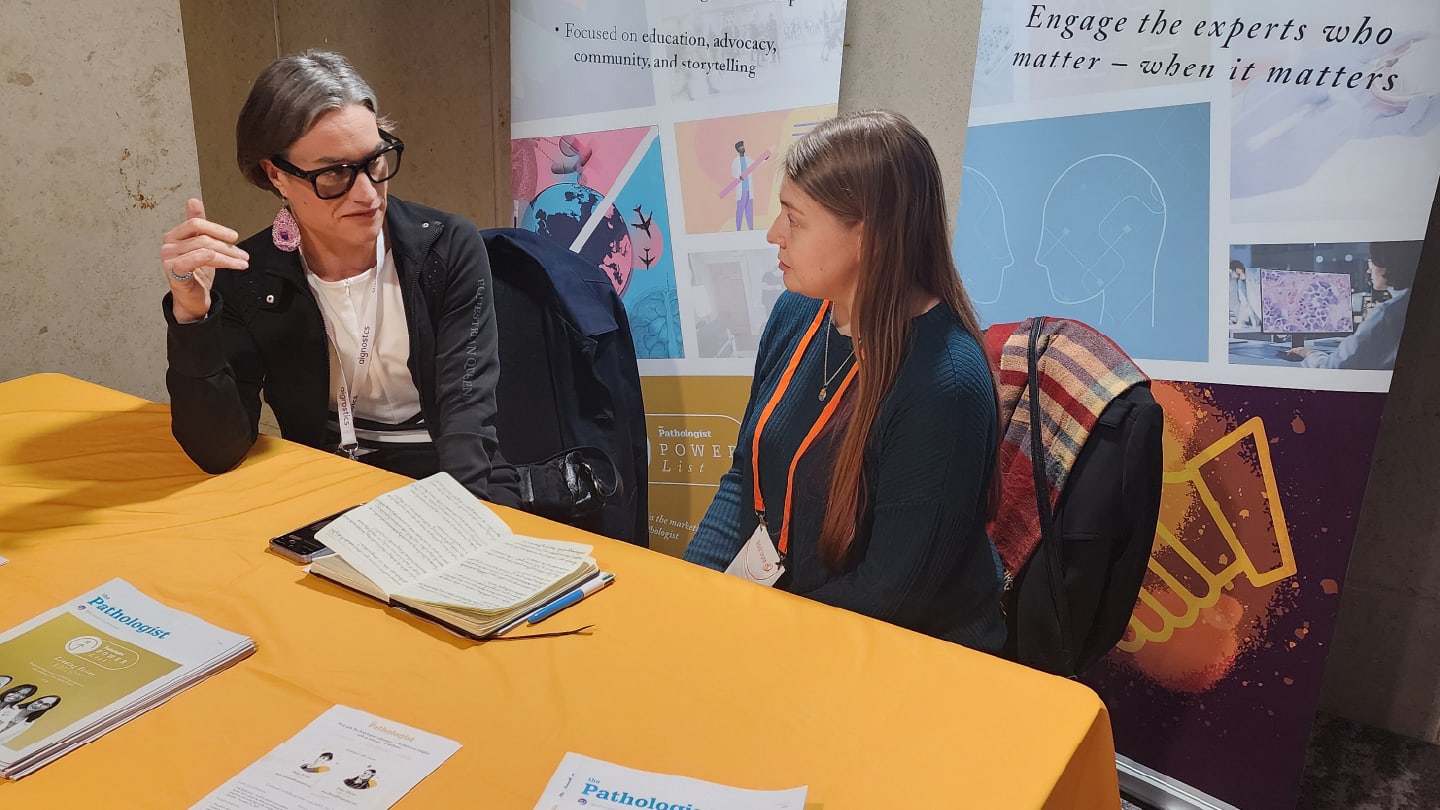
The Digital Pathology and AI Congress; Europe 2025 congress made one thing clear: computational pathology is no longer “on the horizon.” Digital technologies are here, scaling, and increasingly part of real-world practice. At the same time, the meeting highlighted just how much work remains to turn technical progress into routine clinical reality.
One of the strongest signals of momentum came from Darren Treanor’s introductory keynote address, providing updates on the National Pathology Imaging Co-operative (NPIC). Over the past year, NPIC has grown to 18 connected sites, now scanning around 150,000 slides every month. Treanor stressed that this growth has been underpinned by secure data infrastructure and governance, and importantly, that NPIC is open to new collaborations. It’s a reminder that large-scale progress is possible when coordination, trust, and standards are built in from the start.
Still, momentum alone isn’t enough. Bobbi Pritt pointed out that long-term success will depend on stronger regulatory frameworks and funding support. Innovation is moving quickly, but without clear regulatory guidance and sustainable investment, adoption risks becoming fragmented – especially in clinical settings where caution is not only expected, but necessary. Look out for our interview with Pritt on these topics coming soon!

That hesitation came up repeatedly throughout the meeting. Aleksandra Zuraw captured it bluntly: “The deeper barrier is hesitation, not hardware.” According to Zuraw, many pathology teams aren’t held back by a lack of scanners or algorithms, but by uncertainty. Where do you start? What’s safe to deploy? Who is responsible when something goes wrong? Without clear answers, it’s easier to wait – and many labs are doing exactly that. We’ll be sharing more from our conversation with Zuraw in the coming weeks.
Waiting, however, was not the message from keynote speaker Liron Pantanowitz, who spoke about the importance of academic–industry partnerships. Drawing on real-world experience, Pantanowitz emphasized that progress happens when pathologists, industry, and researchers work together from the beginning. His call to action was clear: pathologists shouldn’t be passive recipients of technology, but active partners helping shape how tools are built, validated, and deployed.
Regulation was never far from the discussion. Across sessions, there was broad agreement that regulation is essential – but also frustration that it often lags behind technology. The challenge, many speakers argued, is finding a way to protect patients and maintain trust without slowing innovation to a standstill.

Looking further ahead, Norman Zerbe offered a long-term perspective, predicting that the gold standard of the 22nd century will be high-quality data. Without standards, he argued, there is no real interoperability – and no meaningful AI at scale. Zerbe highlighted the role of DICOM as a powerful foundation, reminding the audience that standardization of digital imaging is not optional if digital pathology is to move forward.
One of the most telling moments of the congress was the packed panel on LIMS (laboratory information management system) and digital pathology. The interest reflected a growing recognition that informatics – not algorithms – may be the hardest part of deployment. Panelists discussed the ongoing gap between AI development and clinical implementation, and it was clear that this conversation is only just beginning.
DP&AI: Europe 2025 didn’t offer easy answers – but it did show a community ready to confront the hard questions. The tools are improving, data is scaling, and collaboration is growing. What’s needed now is confidence, clarity, and the willingness to take the first steps – even if the path forward isn’t fully defined yet.
There is a lot still to tackle. And judging by the conversations at the Congress, the field is finally ready to do just that.
Newsletters
Receive the latest pathologist news, personalities, education, and career development – weekly to your inbox.



