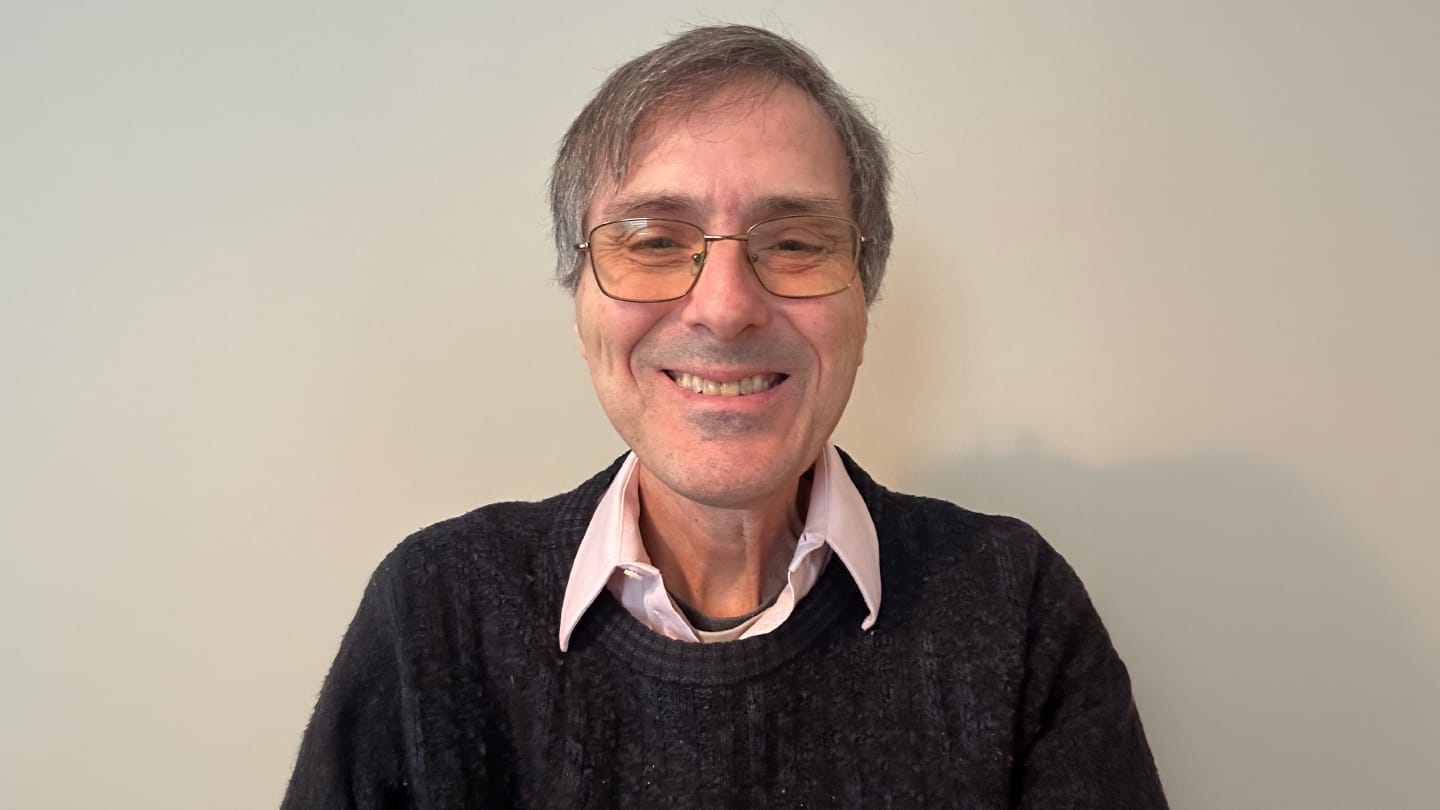
Nat Pernick is a pathologist, attorney, and entrepreneur best known as the founder and owner of PathologyOutlines.com – a free, continuously updated online pathology textbook launched in 2001. He is a third generation Detroiter and received degrees from Wayne State University (BS Math, 1979) and the University of Michigan’s Medical (1983) and Law Schools (1986). He completed an AP/CP residency (1999) and a surgical pathology / research fellowship (2000) at Wayne State University / Detroit Medical Center. His CV is at NatPernick.com.
In an interview in 2021, you said that you started PathologyOutlines.com as a mission aimed at helping pathologists in their daily diagnostic practice. What has the site accomplished since then?
I am very proud of three things. First, the quality of our newly written articles – each peer reviewed by our editorial board – is outstanding. Second, our website is widely used; at both US and European conferences, it is difficult to find a practicing pathologist who does not rely on it. Third, pathologists genuinely seem to love PathologyOutlines.com. Saying that, we are always looking for ways to improve and carefully consider all feedback to make the website even better.
Looking back, were there any pivotal moments when you realized PathologyOutlines.com had shifted from a personal project into a widely-respected reference website?
I began writing PathologyOutlines.com in August 2001 while at a family camp. My original goal was simply to organize the diverse materials I had accumulated during residency and fellowship into something coherent and logical. I also believed that information for physicians should be free and easy to access. At the time, I didn’t understand why others hadn’t done this, but now I do: it is an enormous amount of work.
I did not think of myself as a writer, nor did I have a grand vision or formal plan for the website. I simply started, kept going and made improvements along the way. Beginning with the thyroid gland, I wrote chapters as single Word documents, saved them as HTML files, and uploaded them to a basic site structure that a friend helped set up.
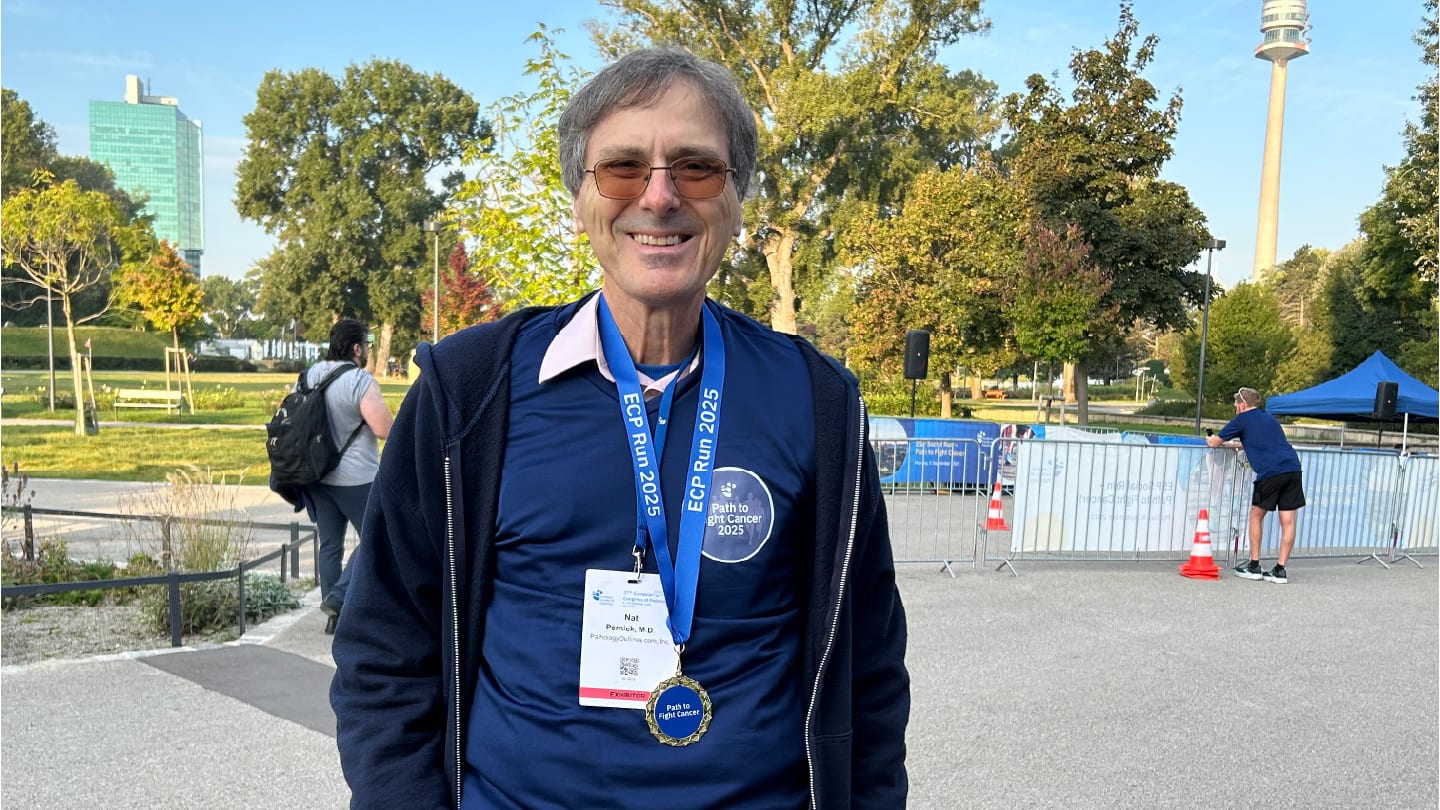
Early on, many pathologists were suspicious – wondering how something like this could truly be free. Over time, those concerns faded, and as I began attending conferences to promote the website, I gradually realized how popular it had become. In August 2025, we had a booth at the European Congress of Pathology in Vienna, and I was amazed that every pathologist we asked said they used the website.
Initially, I thought it would be remarkable if the site reached 200 visits per day. That milestone was reached within a year. By December 2025, the site was receiving over 79,000 visits per day.
In the previous interview you described this project as “an almost impossible task.” Obviously, you have overcome all the major obstacles. How did you manage that?
It was “almost impossible” largely because the scope was so broad. In addition, I was committed to offering the textbook at no cost. Rather than waiting for a perfect plan, I simply started and addressed problems as they arose. I spoke with many people and incorporated their ideas. Another challenge was that, throughout this process, I continued practicing pathology and law.
What helped was that I was not driven by a need to make money. I was also motivated by a philanthropic and idealistic belief: this information should be freely and easily accessible to everyone.
Could you expand on the breadth of that scope, and the number of contributors involved?
PathologyOutlines.com contains approximately 4,700 topics, each focused on a diagnosis, subject, IHC stain, or molecular marker. We have about 2,300 authors in total, with roughly 600 currently active. In addition, there are about 100 editors and reviewers, and we are still recruiting.
What processes are in place to maintain topic relevance and editorial standards?
Author requirements are listed under the Authors tab in the header. Editors are appointed from among authors who have written at least four topics and are rated highly by our staff and editors.
Ultimately, our Editorial Board determines what topics appear on the website. They review each chapter annually and also respond to comments or suggestions from pathologists.
Topics are approved by the Editorial Board. Prospective new authors contact our Author Team to confirm that at least one author meets our requirements and to identify subject areas of interest. Once agreed upon, the Author Team sends detailed instructions.
Authors then submit a draft, which is reviewed for compliance with those instructions. The draft is converted into an online format by one of our HTML editors and subsequently reviewed by a format editor and a medical copy editor. During these stages, questions or comments may be sent to the authors and must be addressed for the topic to move forward.
The topic is then reviewed by a member of the Editorial Board or the Board of Reviewers, followed by review by the Deputy Editor for that subspecialty. Authors must again respond to any comments. Once all revisions are complete, the topic is finalized and published.
Where do you draw lines to ensure that commercial pressures on the website never compromise educational independence or user trust?
We have been asked to sell our email lists, which we will not do. We have also been approached about selling the website, which I do not intend to do. Instead, the website will pass to my children upon my death. When approached about collaborations, we aim to find solutions that are mutually beneficial and have had several successful partnerships.
To what extent has your law training helped you with the business side of PathologyOutlines.com?
I practiced law for 20 years and I believe my legal training equipped me with an understanding of how to run a business. Beyond that, it trained me to see issues from multiple perspectives, and certainly gave me an advantage in interpreting the large volume of long and tedious documents involved in running a business. I'm also adept at managing the collection process for advertising revenue, since even prominent institutions often struggle to pay their bills.
What were your hardest challenges so far? Did your work on PathologyOutlines.com have any repercussions on your private life?
One of the hardest challenges for me, personally, was learning to delegate. For many years, I made every change to the website myself, including advertisements. As a result, I couldn’t travel without staying close to my laptop. I was anxious that others would make mistakes that might damage the site.
That changed after my divorce, which was a personal crisis. The saying “don’t waste a crisis” turned out to be apt. Feeling that my life was already heading downhill, I decided to delegate – essentially thinking, “what the heck.” I discovered that others did make mistakes, but fewer than I did and I could usually catch them.
More importantly, delegation freed me to actually do my job as CEO, which I had been neglecting. I finally had time to think about the future of the business and that made a substantial difference.
Any plans for the future?
I believe that complexity in science is essential for understanding how nature works. Thus, I am applying these ideas in a new free online textbook, How Cancer Arises, on the CCN pages, which I expect to include a complete breast cancer chapter by mid-2026.
What do you hope will be your legacy as the founder and owner of PathologyOutlines.com?
It is equally important for businesses to embrace charitable activities as a core part of their mission, rather than trying to extract every possible dollar from employees, customers, and vendors. I hope that my successors continue to promote the importance of medical information being freely available and readily accessible.
Newsletters
Receive the latest pathologist news, personalities, education, and career development – weekly to your inbox.