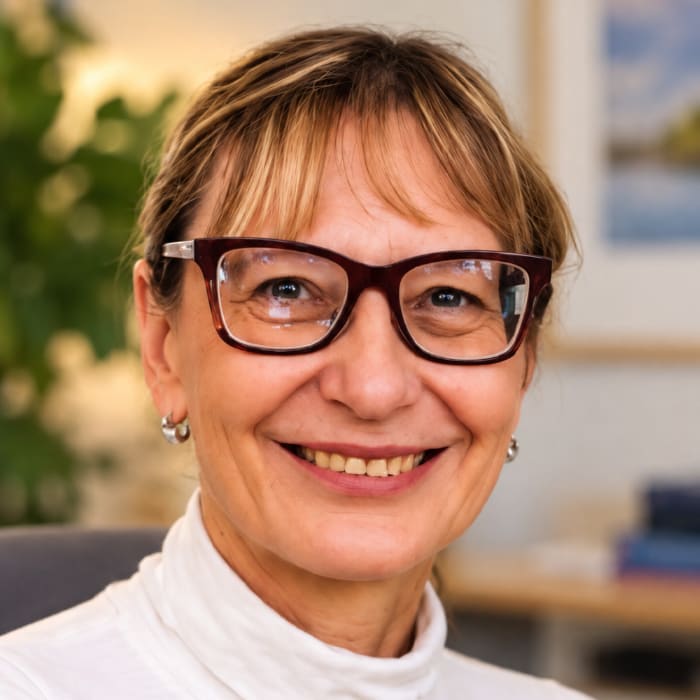
Tiziana Salviato
Pathologist at Istituto Nazionale dei Tumori Fondazione G. Pascale, Naples, Italy.
False
Pathologist at Istituto Nazionale dei Tumori Fondazione G. Pascale, Naples, Italy.
What needs to change in the way we work, and what are you doing to drive that change?
Throughout my career, I have believed that pathology grows through sharing: sharing cases, experience, knowledge and, increasingly, technology.
Alongside diagnostic practice, education has therefore always been one of my strongest commitments. I began by organizing small teaching activities for colleagues who could not easily attend external courses. Over the years, these initiatives grew into national and international educational meetings, allowing me to establish lasting relationships with pathologists from different countries and to bring different experiences and perspectives together around our common language: morphology.
Today, digital pathology offers us an extraordinary opportunity to take this further. Digital slide sharing can transform a difficult case from an individual diagnostic problem into an international learning opportunity. I have experienced how sharing slides and discussing cases across institutions and countries can stimulate dialogue, challenge our interpretations and allow all participants to learn from one another.
My ambition is now to help develop an international network of pathologists based on digital case sharing, education, mentorship and collaboration, connecting different generations, institutions and countries. Expertise should not be limited by geography: a young pathologist should have the possibility to discuss a challenging case with an expert thousands of kilometres away.
I also strongly believe that pathology should be promoted as a clinical specialty. We are not simply interpreting slides. Our diagnoses determine treatment, prognosis and patient management, and pathologists should therefore be increasingly visible members of multidisciplinary clinical teams.
As a woman who has built her career in pathology, I would particularly like to encourage women and younger colleagues to see pathology as a specialty in which they can become leaders, innovators and mentors themselves, and to create international connections that can support them throughout their careers.
Finally, our profession is entering an extraordinary technological transition. Digital pathology and artificial intelligence should not distance us from morphology or from patients. Used wisely, they can help us improve diagnosis, exchange expertise and make high-level pathology education accessible beyond geographical and economic boundaries.
My goal is not simply to use new technology, but to use it to connect people.
I would like to help build a pathology community without borders: one in which a slide can travel instantly, experience can be shared freely, and knowledge can become an opportunity for someone else to grow.
Dive deeper into the world of pathology. Explore the latest articles, case studies, expert insights, and groundbreaking research.
Receive the latest pathologist news, personalities, education, and career development – weekly to your inbox.
False