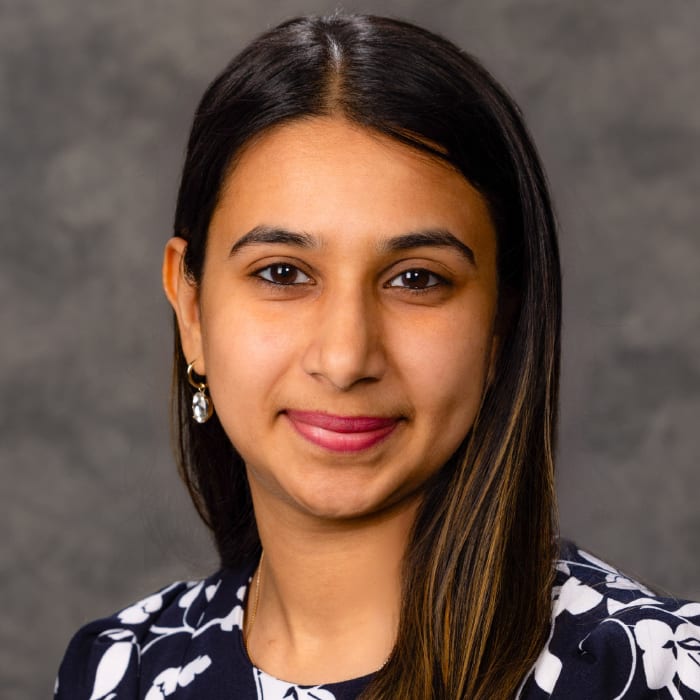
Saroja Devi Geetha
Pulmonary Pathology Fellow (PGY-6), Department of Laboratory Medicine and Pathology, Mayo Clinic, Arizona, USA.
False
Pulmonary Pathology Fellow (PGY-6), Department of Laboratory Medicine and Pathology, Mayo Clinic, Arizona, USA.
What does the future of laboratory medicine look like, and how are you helping to future-proof your department?
Pathology is changing fast. Digital pathology, artificial intelligence, and molecular testing aren’t abstract concepts anymore. As a trainee, I keep asking myself what our future will look like and what I can do now to help build it.
For me, digital pathology isn’t just trading microscopes for screens; it’s an opportunity to rethink how we work. We are dealing with shortages across pathologists and lab personnel, all while clinical demands keep rising. So how do we continue delivering high-quality care without overwhelming the people who make that care possible? Cytology is one of the best places to explore this. With minimally invasive procedures increasing, not just for diagnosis but also for ancillary testing, clinicians rely heavily on cytopathologists for adequacy assessments. But having cytology personnel physically present for every procedure isn’t always feasible. In one project, we tested a scanner that digitizes FNA smears in real time and can be operated without pathology expertise. This allows cytopathologists to review cases remotely and navigate slides themselves, without needing trained personnel stationed at every site. It was a small pilot, but it showed me how digital tools can solve real workflow problems.
Another project that shaped my thinking explored using cytology supernatants for rapid molecular testing with a turnaround time of under two hours. What struck me wasn’t just the science, it was seeing something routinely discarded become clinically meaningful. This kind of work excites me because it shows how newer technology can help us do more with less, bring precision medicine closer to the patient, and use every available resource to make care faster and smarter.
While I was focused on these innovations, a mentor reminded me of something simple but important: It’s easy to get lost in the world of pathology and slowly forget to be a physician. That hit me hard. As pathologists, we sit at a unique intersection. We have clinical information, labs, imaging, and pathology slides: The piece of the patient’s story most clinicians never see directly. Yet it’s easy to get so focused only on the slides that we lose sight of the patient behind it. We need to pause and ask: What is happening to this patient? What is the clinical team trying to figure out? This perspective has changed how I approach my cases as a physician-pathologist. It has encouraged me to tie every interpretation back to the clinical context and explain not just what I see, but why it matters for the clinical team and the patient.
These experiences have helped me contribute to future‑proofing pathology by identifying workflow gaps, supporting practical digital solutions, and teaching juniors to think like physician‑pathologists. They have also shaped my view of what the next generation of laboratory medicine needs: pathologists who can embrace new innovations, champion useful tools, and collaborate across teams while staying grounded in clinical reasoning. That’s the kind of pathologist I am working to become, and the kind I hope to help train.
Dive deeper into the world of pathology. Explore the latest articles, case studies, expert insights, and groundbreaking research.
Receive the latest pathologist news, personalities, education, and career development – weekly to your inbox.
False