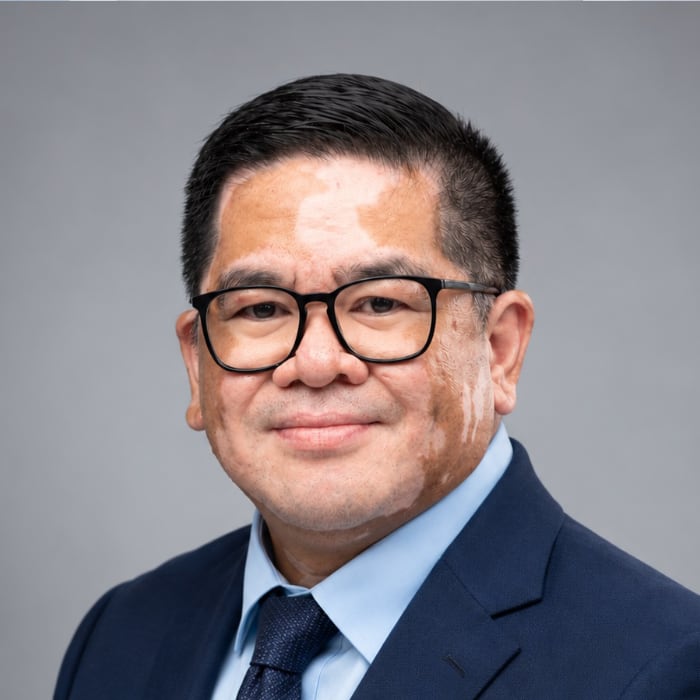
Rex Famitangco
Director of Laboratory Services, Morrill County Community Hospital, Bridgeport, Nebraska, USA
False
Director of Laboratory Services, Morrill County Community Hospital, Bridgeport, Nebraska, USA
What’s the biggest challenge facing your specialty right now, and how are you addressing it via leadership?
Labor shortages in pathology and laboratory medicine have reached a boiling point. Many see them as workforce crises. I see them as leadership crises.
Pathology and laboratory medicine have never been more essential to patient care. From emergency transfusions and infectious disease outbreaks to precision medicine and early cancer detection, laboratory data guides clinical decisions every day. Yet our profession faces a workforce crisis driven by an aging workforce, limited educational capacity, and increasing diagnostic complexity. In rural healthcare, the consequences are even greater. Workforce shortages are measured not by vacant positions, but by patient access. A single vacancy can delay testing, reduce local services, and force patients to travel hours for care that should be available in their own communities.
Leadership begins long before a position becomes vacant. Rural hospitals cannot compete for a workforce that does not exist. Instead of competing for a shrinking talent pool, we must build one. We must create a profession people aspire to join, careers they choose to stay in, and future leaders they are inspired to become.
I recognized early in my career that rural healthcare needed a stronger workforce pipeline. Rather than waiting for someone else to build it, I did. As a former Program Director and Instructor at Western Nebraska Community College, I developed the Phlebotomy (PBT) program from the ground up and later established the Associate of Applied Science Medical Laboratory Technician (MLT) program. Together, these programs created pathways for students to enter laboratory medicine while strengthening the rural workforce. Watching students discover this profession confirmed what I already believed: leadership is not about filling today's vacancies. It is about preparing tomorrow's professionals.
That same philosophy transformed our laboratory at a rural Critical Access Hospital. My team embraced the ASCP Leading Laboratory framework centered on Trusted Leadership and Professional Development, creating a culture where every team member could learn, grow, and understand their direct impact on patient care. Our laboratory became the first Critical Access Hospital in the United States and the first hospital in Nebraska to earn the ASCP Leading Laboratory designation. More importantly, it proved that investing in people before processes can transform even one of the nation's smallest rural laboratories into a model of excellence.
Beyond the four walls of our laboratory, I serve on the ASCP Workforce Steering Committee and the ASCP Immigration, Policy, and Workforce Workgroup, advocating for evidence-based policies that strengthen education, support professional certification, and create thoughtful immigration pathways for rural and underserved communities. Having begun my own career through an employment-based immigration pathway, I understand that workforce policy is ultimately patient care policy.
I measure my leadership by the leaders I help develop. If pathology and laboratory medicine is to flourish, we must stop treating workforce shortages as hiring crises and start leading them as opportunities to invest in people. When we do, we strengthen not only our profession, but also the future of rural healthcare and every community it serves.
Dive deeper into the world of pathology. Explore the latest articles, case studies, expert insights, and groundbreaking research.
Receive the latest pathologist news, personalities, education, and career development – weekly to your inbox.

False