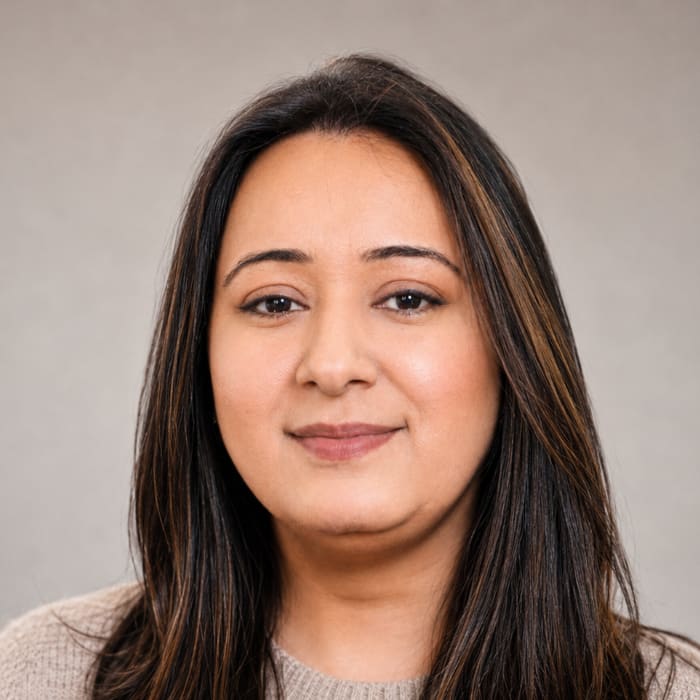
Neha Seth
Pathology Resident, Northwell Health, New Hyde Park, New York, USA
False
Pathology Resident, Northwell Health, New Hyde Park, New York, USA
What does the future of laboratory medicine look like, and how are you helping to future-proof your department?
As pathology evolves, we need to rethink not only how we diagnose disease, but also how we train future pathologists. Never before have trainees had access to so much information. Digital pathology, remote sign-out, expanding molecular data, online teaching platforms, and artificial intelligence are reshaping how we work and learn. Yet access alone does not create judgment. As traditional side-by-side teaching becomes less consistent in digital and remote settings, the real challenge is no longer finding information, but knowing what matters, how the pieces fit together, and how to apply that knowledge in practice.
Future-proofing pathology is not only about adopting new technology; it is about preparing people to use it with confidence and judgment. Purposeful teaching should not depend on encountering one exceptional mentor; it should be embedded in every training program. Each trainee deserves the opportunity to develop confidence through structured guidance, meaningful discussion, and thoughtful mentorship.
One of my most meaningful experiences was during a rotation where my attending did not rely solely on the cases that arrived that month. If an important diagnosis was not represented on the service, he would review archived slides or a teaching presentation to ensure I still learned it. His goal was not simply to complete sign-out but to consider what I should confidently understand before leaving the rotation. By the end of the month, I realised that my confidence came not from reading more material, but from learning with purpose, context, and continuity.
Throughout my training, I have tried to apply that lesson beyond my own learning. Whenever I encounter a workflow or concept that initially feels overwhelming, I ask how it could be explained more clearly to the next trainee. On new rotations and services, I have organized complex workflows into practical guides, checklists, and reusable teaching materials for junior residents during sign-out or call. I also strive to create an environment where trainees feel comfortable asking questions, because uncertainty is part of learning, not evidence of failure. By strengthening how knowledge is shared today, I hope to strengthen our department for tomorrow.
Growing up in India, I learned the concept of guru dakshina – a student’s expression of gratitude to a teacher, conveyed not only in words but also through meaningful action. I have come to see residency through that lens. Training is not simply about what an institution gives us; it is also about what we leave for those who follow.
The future of pathology will be digital, but it should not become impersonal. Technology can improve access and efficiency, but thoughtful teaching transforms information into judgment. The greatest legacy of a pathology department is not measured solely by its publications, grants, or complex diagnoses. It is measured by the people it trains and the culture it leaves behind. By making learning more intentional, practical, and supportive, I hope to leave each part of my training environment a little stronger than I found it.
Dive deeper into the world of pathology. Explore the latest articles, case studies, expert insights, and groundbreaking research.
Receive the latest pathologist news, personalities, education, and career development – weekly to your inbox.
False