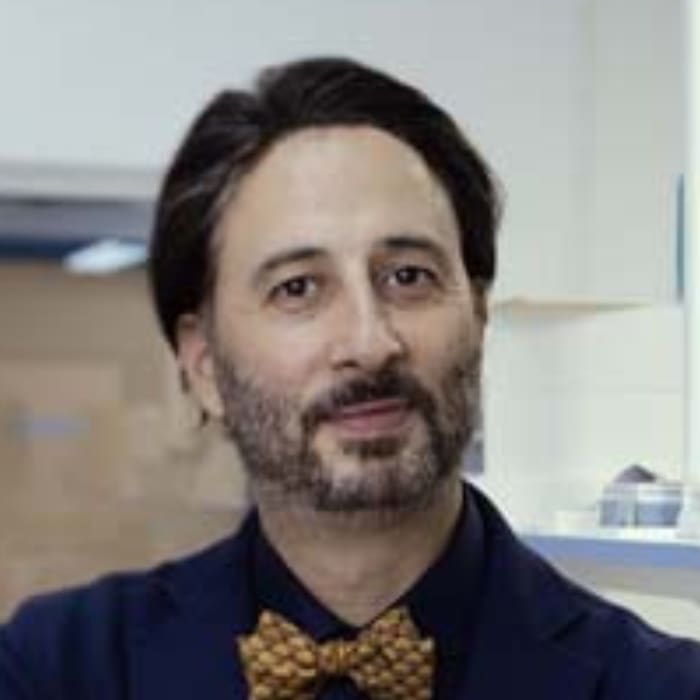
Kinan Drak Alsibai
Head of the Pathology Department and the Spatial Multiomics Biopathology Platform, University Hospital of French Guiana, Cayenne, French Guiana
False
Head of the Pathology Department and the Spatial Multiomics Biopathology Platform, University Hospital of French Guiana, Cayenne, French Guiana
What gaps in technology/training/processes concern you most, and how are you addressing them via innovation?
The 2025–2026 period marked an important transition in my career: from a pathologist focused primarily on diagnosis to a spatial pathologist.
I lead the only pathology department in French Guiana, a European territory in South America. Practicing in the heart of the Amazon means working far from mainland France and serving a vast, largely rainforest-covered region where remote communities face significant geographical barriers to healthcare.
For several years, my priority has been to provide high-quality pathology diagnosis locally, particularly in tropical infectious diseases and oncology. Over time, this experience convinced me that our ambition should extend beyond diagnosis to a deeper understanding of the biology underlying the diseases we encounter every day.
Since October 2025, I have led the Spatial Multiomics Biopathology Platform of French Guiana (PBMS). The platform was developed with support from the FEDER–FSE+ Programme 2021–2027 (Synergie No. GUY005179) and the 2024–2027 Convergence and Transformation Contract. It is based within the Institute of Population Health in Amazonia at the University Hospital of French Guiana in Cayenne.
In only a few months, we have begun building a technological infrastructure, a scientific organization, our first translational research projects, a network of collaborators and, most importantly, our own scientific identity.
But PBMS is not simply about acquiring sophisticated equipment. Our ambition is to build an infrastructure at the interface of pathology, spatial biology, omics, artificial intelligence, bioinformatics and clinical research. Technology is not an end in itself; it should help us better understand the diseases affecting the population we serve and ultimately improve patient care.
At the same time, this transition toward spatial pathology has reinforced, rather than diminished, my attachment to morphology. As a pathologist, I do not see tissue as merely a support for omics technologies. Its architecture remains the starting point for analysis and the essential framework for biological interpretation.
This conviction has shaped the scientific identity we are developing at PBMS: a morphology-guided multiomics approach, in which spatial and molecular data are interpreted through tissue architecture rather than independently from it. Our aim is to transform complex spatial data into biological knowledge that can generate new hypotheses and biomarkers, and contribute to more personalized patient care.
Our first research projects are already underway, focusing on health challenges relevant to our territory, especially tropical infectious diseases and oncology. They share the same objective: to use spatial pathology to better understand diseases that directly affect our patients.
Ultimately, this journey has transformed not only the tools available to us, but also the way I see my profession. My goal is not to move away from morphology, but to use new technologies to see further into the tissue while keeping pathology at the center of precision medicine.
For me, the most meaningful transformation would be to make French Guiana not only a territory where unique diseases and biological samples can be studied, but a place where scientific knowledge is itself generated, interpreted, and shared from the heart of the Amazon.
Dive deeper into the world of pathology. Explore the latest articles, case studies, expert insights, and groundbreaking research.
Receive the latest pathologist news, personalities, education, and career development – weekly to your inbox.
False