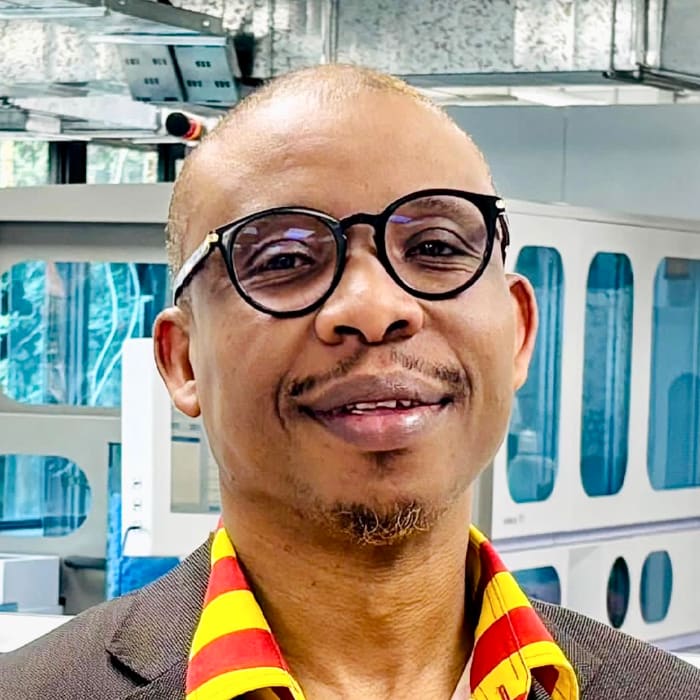
Ahmed Kalebi
Founder, Executive Chairman, CEO and Principal Pathologist, Dr Kalebi Labs (DKL), Nairobi, Kenya
False
Founder, Executive Chairman, CEO and Principal Pathologist, Dr Kalebi Labs (DKL), Nairobi, Kenya
What gaps in technology/training/processes concern you most, and how are you addressing them via innovation?
Having practised pathology for more than two decades in Africa, my deepest concern remains the technology gap in African laboratory medicine. We have consistently lagged behind global advances, and even when new tools become available they rarely settle into integrated, sustainable diagnostic workflows. Limited resources and scarce specialist expertise make that translation especially difficult. This is the gap that weighed on me when I founded DKL in Nairobi launched in October 2024 after a 3-4 year family sabbatical. I chose not to replicate or gradually digitise existing laboratory models. I set out to build something different from the ground up.
I am a strong proponent of deploying the latest technological advances, including AI, in resource-poor settings. DKL was established as a greenfield, paperless, digital-first referral laboratory. Automation and digitisation were designed as core infrastructure rather than experimental extras. We combine end-to-end digital workflows and total laboratory automation with AI-assisted peripheral blood film and bone marrow morphology, computational flow cytometry, digital electrophoresis, software-supported molecular genetics and NGS, digital histopathology with remote specialist review, and professionally reviewed, AI-supported interpretative comments. More recently, we have also introduced digital microbiology. None of these are pilot projects; they are used every day for real patients.
Acquiring the technology proved the simpler task. The hard part has been developing the people and processes to use it effectively. I made the deliberate decision to build a homegrown laboratory with a team largely new to these technologies. Knowledge and experience gaps are closed through continuous case-based learning. Staff learn on the job, review digitally flagged cases, validate tools against local disease patterns, and refine workflows in real time rather than waiting for external training programmes. Governance has been non-negotiable. These tools support professional judgement; they do not replace it. Validation, quality assurance, clinical context, and final sign-out stay firmly with qualified pathologists and laboratory scientists.
For me, AI, including integrated large language models, is no longer simply the future of pathology; it is already part of its present, and laboratories that do not learn to adopt and govern it responsibly risk being left behind. Working this way has reinforced a practical realisation that laboratories operating with the fewest resources stand to benefit most from these newest technologies. Not because the tools can substitute for scarce professionals, but because they can extend what those scarce professionals are able to achieve. Specialist shortages make support for interpretation, standardisation, knowledge access, and workflow efficiency valuable. This has already meant faster specialist access through remote digital review, greater consistency in reporting, and less time spent on repetitive manual tasks, freeing the team to concentrate on complex cases requiring human judgement.
Resource constraints should not set the limit of technological ambition. Laboratories in our setting should not be expected to wait at the end of the technology adoption curve. My aim has never been to recreate yesterday’s laboratory at lower cost in Africa. It has been to show that we can build tomorrow’s laboratory here, now. In less than two years from a standing start, DKL is serving thousands of patients each month by integrating automation, digital pathology, and responsible AI around the pathologist while developing the people and processes that make the model sustainable, replicable, and scalable.
Dive deeper into the world of pathology. Explore the latest articles, case studies, expert insights, and groundbreaking research.
Receive the latest pathologist news, personalities, education, and career development – weekly to your inbox.
False